

TLDR
- A naval blockade targeting Iranian ports commenced Monday evening under U.S. enforcement.
- Ships traveling through Hormuz to non-Iranian destinations can continue commercial passage.
- President Trump declared Iranian ships approaching the zone would face “immediate ELIMINATION.”
- The UKMTO confirmed restrictions extend across Arabian Gulf, Gulf of Oman, and Arabian Sea regions.
- The United Kingdom announced it would not back the American blockade operation against Iran.
On Monday evening, the United States initiated a naval blockade targeting Iranian ports, escalating tensions with Tehran to a critical new level. President Donald Trump declared Iran’s days of “extorting the world” were over and issued a stark warning that Iranian ships attempting to breach the operation would face destruction. While the measures target vessels conducting business with Iranian coastal facilities and petroleum terminals, commercial shipping through the Strait of Hormuz continues for traffic bound for other destinations.
Iranian Coastal Waters Now Under U.S. Naval Enforcement
The enforcement action commenced following unsuccessful weekend diplomatic talks between American and Iranian officials. Washington linked the blockade to ongoing disputes regarding Iran’s nuclear activities and regional security challenges. According to U.S. Central Command, enforcement applies to all vessels engaging with designated Iranian ports, regardless of their flag registration.
The UKMTO, Britain’s United Kingdom Maritime Trade Operations, confirmed that maritime restrictions now cover the Arabian Gulf, Gulf of Oman, and Arabian Sea waters east of the Hormuz passage. The guidance indicates enforcement across Iran’s entire coastline, encompassing ports and energy export facilities. However, vessels transiting the strategic waterway toward non-Iranian ports maintain navigational rights.
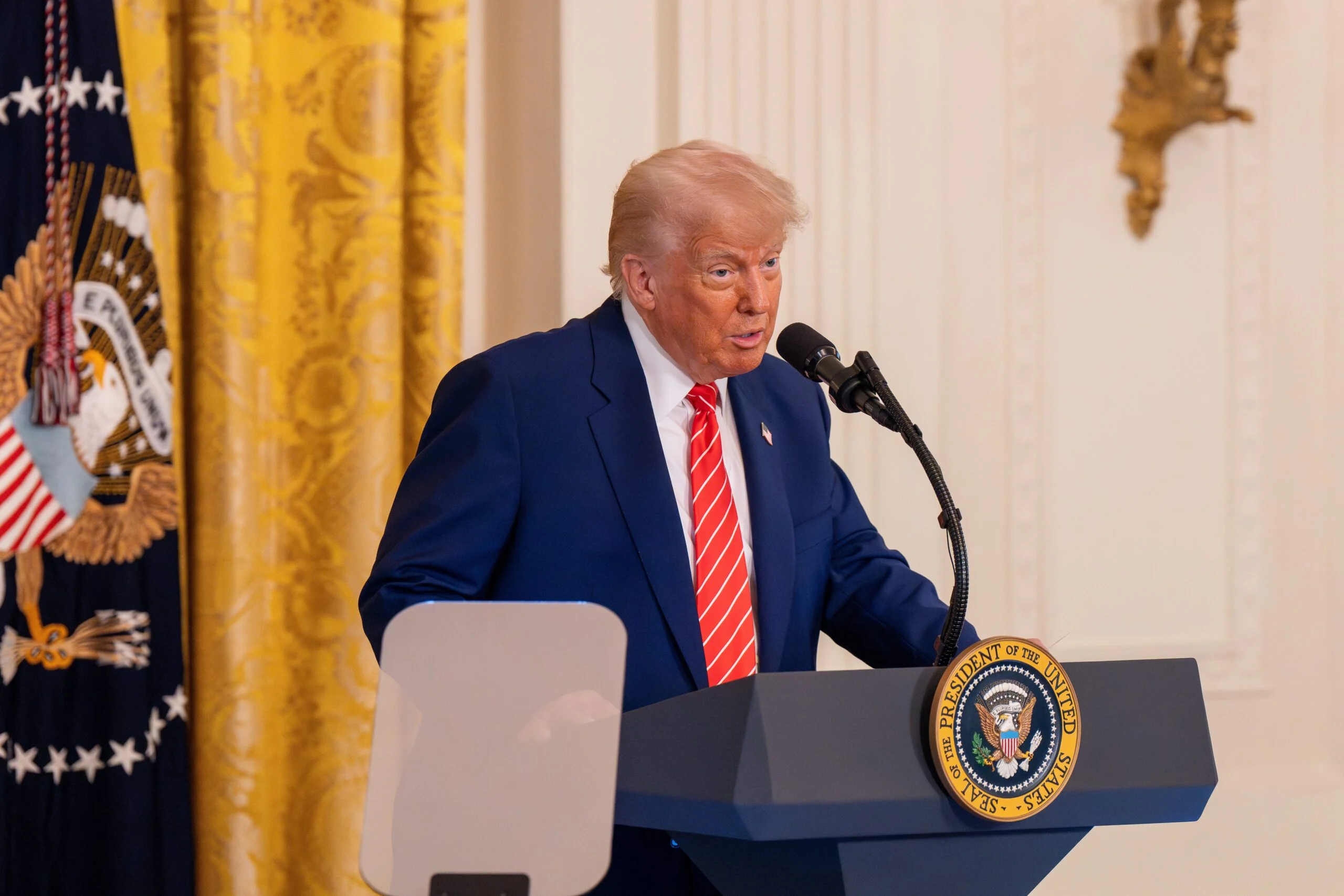
Speaking from the White House grounds, Trump stated Iran would no longer be allowed to hold the international community hostage. Through social media, he emphasized that Iranian naval vessels venturing near the blockade perimeter would face “immediate ELIMINATION.” The president drew parallels between current engagement protocols and U.S. counter-narcotics naval operations.
Nuclear Negotiations Collapse as Military Posture Intensifies
Trump connected the naval action directly to the breakdown of negotiations in Islamabad concerning Iran’s nuclear capabilities. While acknowledging progress on certain issues, he emphasized the fundamental impasse over Iran’s pathway to nuclear weapons. He referenced ongoing efforts to secure highly enriched uranium materials remaining after the June 2025 military engagement.
Tehran’s response characterized the blockade as illegal and economically destructive. Foreign Ministry spokesman Esmaeil Baghaei condemned the action through social channels as retribution against global commerce. Iranian military leadership countered that any interference with Iranian port access would jeopardize all Gulf and Gulf of Oman harbor security.
The blockade implementation has generated uncertainty about the recently established two-week ceasefire arrangement. Iranian representatives indicated that American disruption of regional maritime activity could constitute a breach of the temporary truce. According to cited officials, more than 15 U.S. naval vessels have been deployed to support the enforcement operation.
International Partners Respond as Energy Markets React
Global energy markets immediately responded to the blockade announcement. Brent crude prices climbed beyond $100 per barrel as market participants assessed potential long-term disruption risks in this critical shipping corridor. Given that approximately one-fifth of worldwide petroleum shipments transit the Strait of Hormuz, any operational restrictions carry significant implications for fuel prices and broader inflation trends.
International leadership is now evaluating response strategies. British Prime Minister Keir Starmer stated the U.K. would not participate in the American blockade while maintaining support for freedom of navigation principles. He and French President Emmanuel Macron announced plans for emergency consultations on establishing an independent multinational maritime protection initiative following the current crisis.
China maintains substantial interests in the waterway as Iran’s primary petroleum purchaser. Beijing issued calls for immediate ceasefire and cautioned against actions threatening international commerce. With military operations now underway while diplomatic communications continue, markets and governments are monitoring whether the blockade generates renewed negotiations or triggers broader regional confrontation.
