

Key Takeaways
- A White House economic analysis found minimal lending impact from prohibiting stablecoin interest payments.
- The banking industry contends the study examines the incorrect policy framework.
- Community lenders express concern about potential deposit migration to yield-generating stablecoins.
- Previous Treasury analysis projected potential $6.6 trillion deposit outflow from widespread adoption.
- The disagreement highlights deepening divisions between traditional finance and digital asset sectors.
The nation’s leading banking trade organization has issued a sharp rebuttal to a White House economic analysis examining stablecoin interest payments, asserting that federal researchers focused on an inappropriate policy framework. The controversy revolves around whether digital currency issuers should have permission to distribute yields to holders, and the potential ramifications for traditional banking institutions, customer deposits, and credit availability. The Council of Economic Advisers concluded that prohibiting interest on stablecoins would produce negligible effects on bank lending volumes. However, the American Bankers Association said the critical question involves the consequences of permitting interest-bearing stablecoins to proliferate throughout financial markets.
Banking Trade Group Criticizes Federal Study’s Framework
The administration’s research paper analyzed the “Effects of Stablecoin Yield Prohibition on Bank Lending.” Using baseline projections, the analysis suggested that banning interest payments on stablecoins might increase banking sector lending by approximately $2.1 billion. This figure represents roughly a 0.02% net expansion, based on the data presented in the government document.
The banking lobby countered that this analytical framework sidesteps the fundamental policy challenge. In their official response, ABA chief economist Sayee Srinivasan and vice president for banking and economic research Yikai Wang argued that the relevant question isn’t whether a prohibition marginally influences lending volumes. Instead, they contended that regulators must examine whether permitting stablecoin interest would trigger deposit outflows from banking institutions, particularly regional and community financial institutions.
The industry association maintained that stablecoin yield offerings could incentivize consumers to transfer capital from traditional deposit products while pursuing superior returns. The ABA emphasized that even if aggregate deposits across the broader financial ecosystem remain constant, the redistribution of funds away from smaller banking institutions could fundamentally alter local lending dynamics and funding mechanisms.
Regional Lenders Face Heightened Vulnerability
The banking association emphasized that community financial institutions face disproportionate risk in this policy debate due to their substantial reliance on local deposit bases. Should depositors redirect capital into stablecoins or migrate toward larger banking conglomerates, smaller institutions may need to secure replacement funding through more expensive channels. These alternative funding mechanisms could include wholesale borrowing markets or increasing interest rates offered on deposit accounts.
The ABA warned that such transformations could diminish lending capacity available to local borrowers while simultaneously increasing borrowing costs for consumers and small enterprises. The organization further noted that certain banking institutions may lack sufficient balance sheet resilience to absorb these funding transitions without experiencing operational stress. This vulnerability explains why the banking sector continues lobbying congressional leaders regarding stablecoin regulatory frameworks.
The banking lobby’s stance echoes findings from a Treasury Department analysis released in April 2025, which projected that widespread stablecoin adoption could generate $6.6 trillion in deposit withdrawals from American banking institutions. This projection has remained a central element of policy deliberations as legislators and industry stakeholders negotiate how digital currencies should be governed and whether they should serve primarily as payment mechanisms or as substitutes for traditional bank deposits.
Interest-Bearing Features Emerge as Legislative Flashpoint
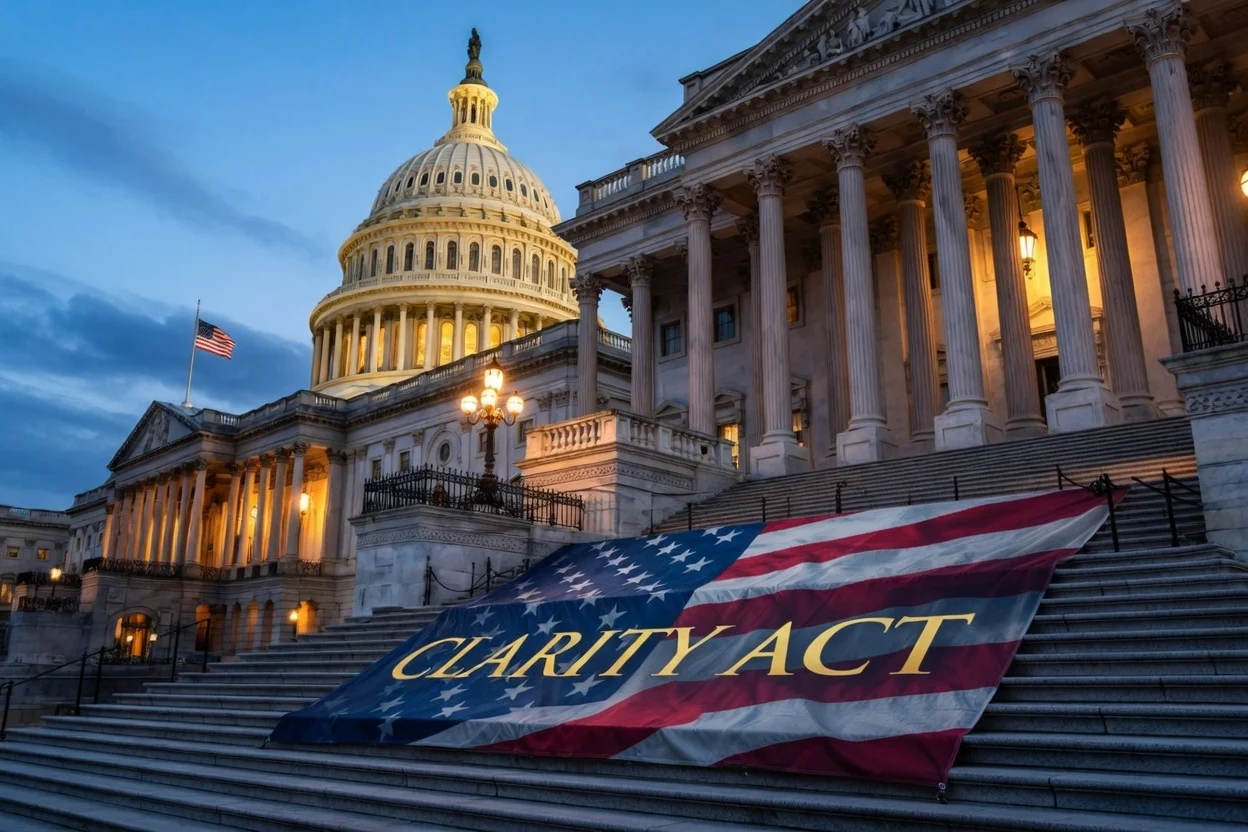
The conflict surfaces amid ongoing negotiations between banking representatives and cryptocurrency advocates regarding Senate legislation that would establish digital asset regulatory parameters. Among the most contentious provisions are those addressing stablecoin interest distribution capabilities. The policy question has attracted increasing scrutiny as market participants evaluate how digital currencies might develop if issuers gain authorization to provide returns directly to holders.
The banking association also conceded a fundamental market dynamic. Its economists acknowledged that consumers and businesses would probably have economic incentives to transfer capital into higher-yielding stablecoins if such instruments achieve broad market availability. This observation corresponds with arguments advanced by segments of the cryptocurrency sector, which has maintained that traditional banks have offered minimal returns on deposit accounts for extended periods.
Coinbase CEO Brian Armstrong has been among prominent voices arguing that stablecoin interest would compel banking institutions to compete more aggressively for customer deposits. The ABA, representing major financial institutions including JPMorgan Chase, Goldman Sachs, and Citigroup, has advocated for the opposing regulatory approach. As the stablecoin marketplace expands, the divergence between traditional banking and cryptocurrency interests has become increasingly pronounced, and the resolution of this dispute could determine the trajectory of American digital asset regulation.
