

Key Takeaways
- Sandisk shares decline following announcement of $1 billion strategic investment in Taiwan’s Nanya Technology.
- Agreement ensures stable DRAM supply to meet escalating AI-powered memory requirements.
- Nanya Technology stock surges on news of capital infusion and strengthened partnership.
- Semiconductor industry increasingly moves toward long-term supply commitments and capacity reservations.
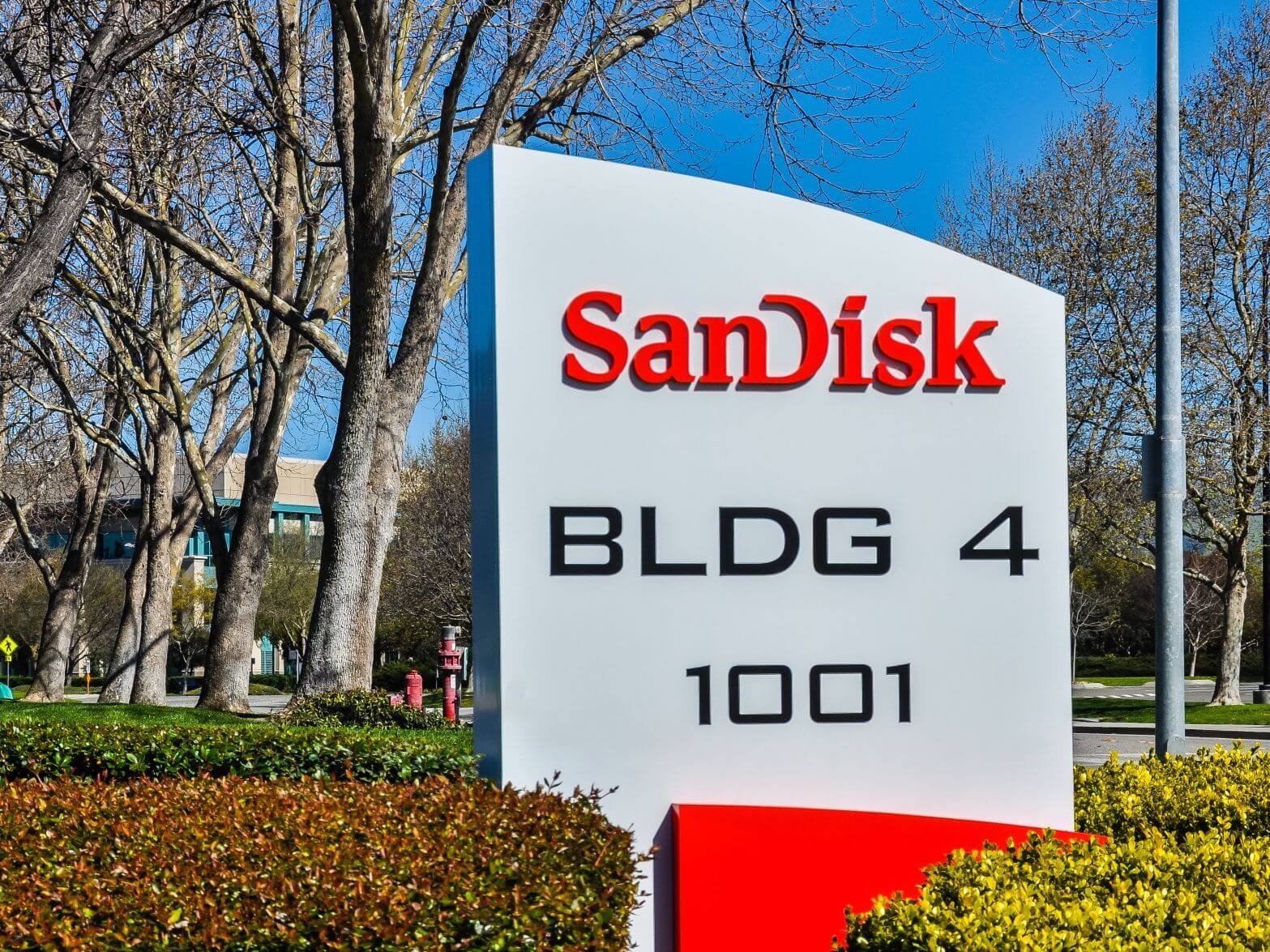
Shares of Sandisk (NASDAQ: SNDK) experienced downward pressure Wednesday following the company’s announcement of a substantial $1 billion investment in Nanya Technology, a Taiwan-based memory manufacturer. Investor response proved cautious despite the deal’s strategic significance, pushing shares down approximately 3.5% during U.S. market hours.
The development underscores mounting pressure within the semiconductor landscape as manufacturers compete to lock in reliable access to essential memory components crucial for artificial intelligence systems.
Meanwhile, Nanya Technology’s stock jumped 4.6% in Taipei trading, with investors responding positively to the capital boost and expanded commercial relationship. These divergent market responses illustrate contrasting perspectives: Nanya gains immediate benefits from fresh funding and partnership strength, while Sandisk confronts near-term expense questions and balance sheet analysis.
Details of the Billion-Dollar Investment
The centerpiece of Wednesday’s announcement involves Sandisk’s commitment to inject approximately $1 billion into Nanya Technology via private placement. Under terms of the arrangement, a Sandisk subsidiary will purchase roughly 138.685 million shares priced at NT$223.9 apiece, establishing a 3.9% ownership position in the Taiwanese memory producer.
The share price reportedly represents approximately 15% below Nanya’s 30-day trading average, aligning with Taiwan’s regulatory framework for private placements. While offering advantageous entry conditions for Sandisk, the discount also signals urgency driving the transaction, as manufacturers compete to secure supply amid constricting global DRAM availability.
Securing Critical Memory Components for AI Infrastructure
Beyond equity acquisition, the partnership encompasses a long-term DRAM supply arrangement between both organizations. Dynamic random access memory remains fundamental for servers, personal computers, and large-scale artificial intelligence computing platforms.
As artificial intelligence applications rapidly accelerate worldwide computational requirements, memory supply networks face intensifying pressure. Market participants are progressively adopting multi-year agreements, moving away from short-cycle purchasing strategies. Sandisk’s strategic action reflects this industry-wide pattern, guaranteeing consistent memory component access as AI infrastructure deployment accelerates.
Nanya’s Manufacturing Expansion Plans
From Nanya Technology’s perspective, the transaction delivers both financial resources and strategic coordination with a prominent global storage provider. The capital raised is anticipated to fund manufacturing facility expansion and production equipment upgrades supporting advanced memory technology development.
The company has actively pursued broader industry partnerships, including additional private placements with significant industry participants like Kioxia and Solidigm. These initiatives suggest a comprehensive approach to capacity scaling and supply chain relationship deepening across the global semiconductor ecosystem.
Recent financial results have demonstrated strength, with Nanya posting substantial revenue growth earlier this year, propelled by heightened demand for memory products linked to AI infrastructure buildout.
Semiconductor Sector’s Supply Security Strategy
The Sandisk-Nanya arrangement represents one component of a broader industrial transformation toward long-term supply guarantees. Industry leaders have observed customers increasingly pursuing multi-year agreements to ensure access to constrained manufacturing capacity.
Nevertheless, challenges persist. Semiconductor markets demonstrate historical cyclicality, while geopolitical developments, trade policies, and manufacturing expenses continue introducing volatility. Furthermore, Sandisk’s Nanya ownership stake carries a three-year lock-up restriction, constraining near-term adaptability despite substantial capital commitment.
Despite these considerations, the transaction signals clear strategic intent: organizations are emphasizing supply certainty over short-term financial conservatism as artificial intelligence fundamentally transforms global memory and storage technology demand patterns.
Ultimately, while Sandisk stock retreated following Wednesday’s announcement, the strategic move represents long-term positioning designed to stabilize DRAM procurement within an increasingly competitive AI-powered semiconductor environment.
