

TLDRs;
- RIVN stock declined 2.8% following the announcement of R2 Performance SUV pricing at $57,990.
- Pricing strategy sparks questions about Rivian’s mass-market positioning and competitive edge.
- Entry-level R2 variants delayed until 2027, potentially straining investor confidence and market demand.
- Tight margins and delivery challenges intensify pressure as company aims for 2026 recovery.
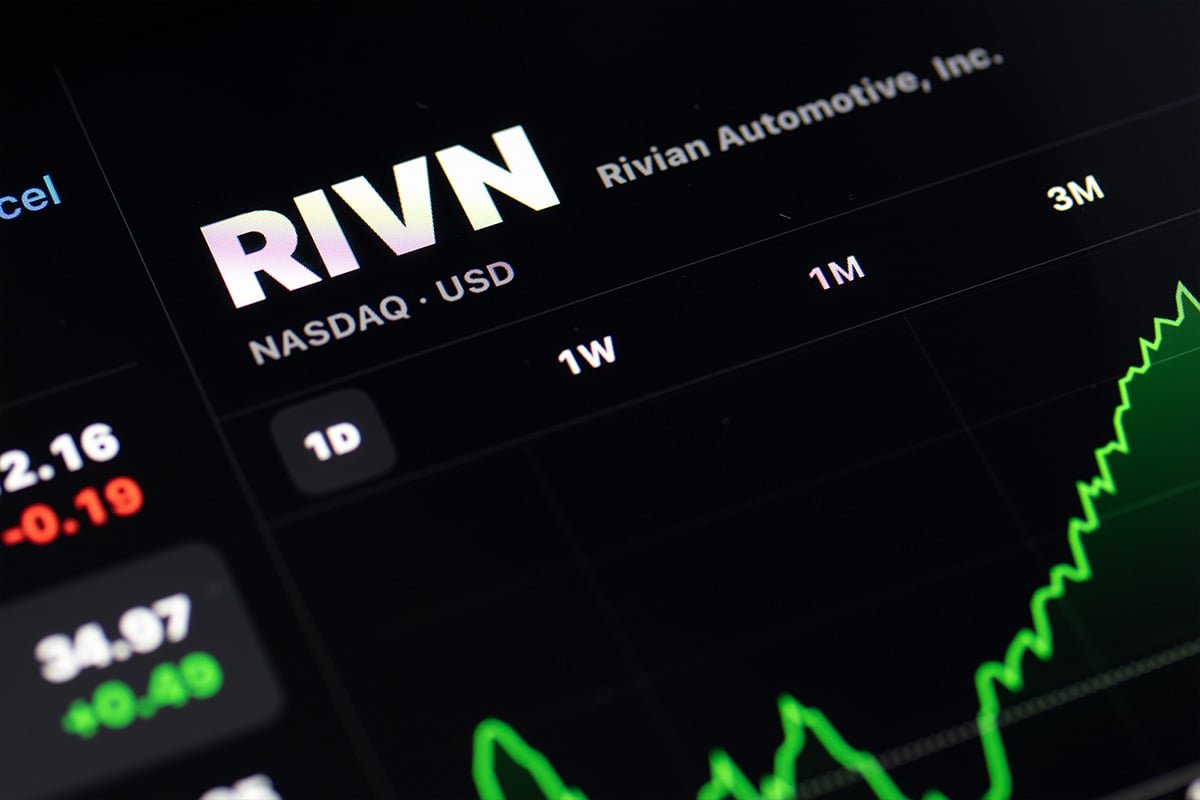
Shares of Rivian Automotive tumbled on Friday, sliding 2.8% to close at $14.86 following the company’s unveiling of pricing details for its eagerly awaited R2 SUV. Market attention centered on the $57,990 price point for the initial R2 Performance variant, while news of the more affordable base configuration—slated for late 2027—received less focus. The downturn signals investor unease regarding Rivian’s capacity to evolve from a premium EV manufacturer into a volume-driven competitor.
Rivian’s R2 platform marks a strategic pivot away from its higher-priced R1 lineup, aiming squarely at mainstream American SUV buyers where Tesla’s Model Y maintains market leadership. The company anticipates the R2 could drive 2026 delivery volumes up 53% to between 62,000 and 67,000 units, rebounding from 2025’s 42,247 vehicles following reduced demand after federal EV tax credit elimination.
Premium Pricing Strategy Triggers Market Skepticism
The initial R2 variant reaching customers will be the Performance edition, delivering 656 horsepower with a $57,990 sticker price. Following later in 2026, the Premium configuration carries a $53,990 price point, while the rear-drive Standard option targets early 2027 availability at $48,490.
An additional Standard configuration, anticipated to start around $45,000, won’t arrive until an unspecified later date. CEO RJ Scaringe stated the R2 “embodies so many of our learnings,” expressing confidence in the vehicle’s engineering and capabilities despite elevated pricing.
The R2’s pricing structure places it alongside Tesla’s premium Model Y configurations but significantly above the base Model Y at $39,990. Industry analysts caution this gap may restrict the R2’s attractiveness to budget-focused consumers and challenge its competitiveness within the expanding electric vehicle sector.
Investor Outlook Remains Divided
Not every Wall Street analyst interprets the stock movement negatively. Cantor Fitzgerald’s Andres Sheppard characterized the R2 as “the most material catalyst” for Rivian in the current year, indicating potential substantial gains with proper implementation.
Yet Rivian’s balance sheet offers limited flexibility for missteps. Throughout 2025, the automaker recorded a $3.65 billion net loss against $5.39 billion in revenue. Capital spending for 2026 is forecast between $1.95 billion and $2.05 billion, with cash reserves totaling $3.58 billion as of December’s end.
R2 reservations surpass 100,000 units, though many originated when federal tax incentives remained active. Analysts at Barclays and D.A. Davidson emphasize the necessity for virtually perfect execution to sustain momentum, especially considering constrained dealership infrastructure and absent tax benefits.
Production Challenges Add Uncertainty
Manufacturing arrangements introduce additional complexity. Rivian has shifted early R2 production to its Normal, Illinois manufacturing site, delaying output from its forthcoming Georgia facility until 2028. Every R2 configuration includes hardware supporting the company’s subscription-based Autonomy+ advanced driver assistance, highlighting Rivian’s technology-focused differentiation approach.
The fundamental question confronting investors centers on whether Rivian can achieve necessary production volumes to satisfy growth targets while controlling expenses. As the first premium-priced R2 arrives this spring, the electric vehicle manufacturer’s 2026 results—and stock performance—will depend on operational execution, market reception, and its ability to compete in an evolving electric vehicle marketplace.
