

Key Highlights
- Armstrong endorses Treasury Secretary’s legislative initiative for crypto clarity
- Cross-party collaboration advances digital asset regulatory framework
- Federal agencies prepared to implement comprehensive crypto oversight
- Digital asset companies relocate operations due to regulatory ambiguity
- Traditional finance shows increased appetite for regulated crypto exposure
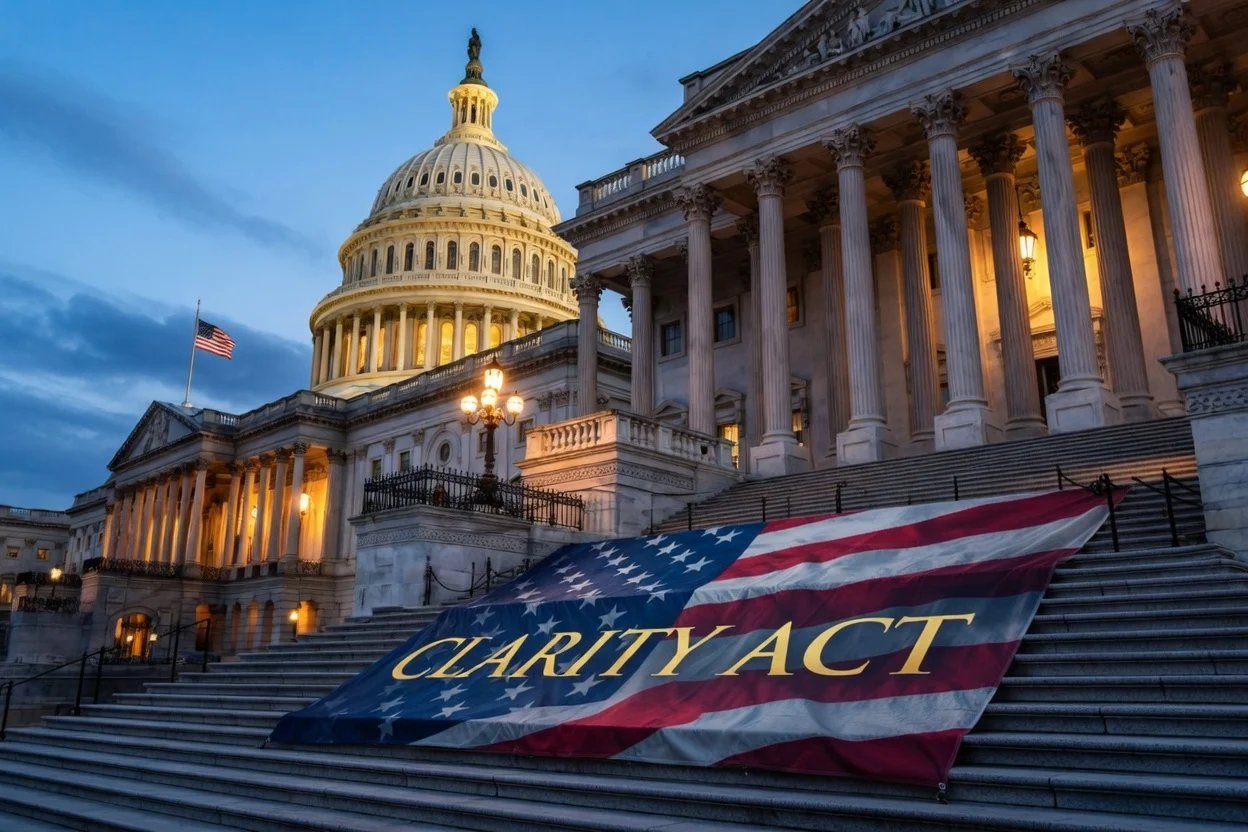
Washington’s regulatory landscape is shifting as Brian Armstrong, CEO of Coinbase, throws his support behind Treasury Secretary Scott Bessent’s campaign for the CLARITY Act. The endorsement arrives amid intensifying pressure on legislators to establish definitive cryptocurrency regulations. Armstrong’s backing strengthens cross-party initiatives while federal oversight bodies indicate their preparedness. This proposed legislation could fundamentally reshape digital asset governance across the nation.
Exchange Leader Endorses Legislative Initiative
Brian Armstrong, heading Coinbase, has thrown his support behind legislative efforts to advance the CLARITY Act across the United States. This proposed legislation seeks to establish comprehensive guidelines for cryptocurrency markets. Armstrong publicly endorsed Treasury Secretary Scott Bessent’s advocacy for congressional action.
Armstrong declared the moment has arrived for legislative bodies to advance the measure. He expressed gratitude toward congressional members and their teams for dedicated efforts. Armstrong highlighted how collaborative work across political divides has influenced the draft legislation. Such unity represents a notable exception in today’s polarized political environment. The cryptocurrency sector has persistently advocated for regulatory definition.
🚨LATEST: COINBASE CEO BACKS SCOTT BESSENT’S CLARITY ACT PUSH
Coinbase CEO Brian Armstrong (@brian_armstrong) has backed Treasury Secretary Scott Bessent’s call to pass the CLARITY Act.
Armstrong publicly agreed with the urgency around crypto regulation. He thanked Bessent… pic.twitter.com/CkKMDIWOzW
— BSCN (@BSCNews) April 10, 2026
Enterprises routinely encounter ambiguity regarding asset classification and regulatory enforcement. Armstrong pointed out that numerous innovators have relocated to foreign jurisdictions following prolonged policy uncertainty. His remarks echo broader industry frustrations. Multiple organizations have established international operations. These companies reference more stable regulatory environments in overseas markets. The proposed legislation attempts to close this policy void domestically.
Congressional and Agency Coordination Advances
Legislative pressure continues mounting as Congress faces demands for cryptocurrency action. Representatives across party lines have participated in ongoing deliberations throughout recent months. The CLARITY Act stands among the most comprehensive proposals currently under consideration.
Paul Atkins stated that the Securities and Exchange Commission alongside the Commodity Futures Trading Commission stand ready. He indicated both regulatory bodies possess capacity to execute the framework following legislative approval. This demonstrates alignment between principal oversight agencies.
The proposed legislation intends to delineate authority for each regulatory entity. It additionally aims to minimize jurisdictional overlap and regulatory confusion. Precise definitions would enable companies to grasp compliance obligations more effectively. Congressional representatives persist in examining the proposal’s specifics. The scheduling of legislative voting remains undetermined. Nevertheless, expanding public endorsement could reshape legislative calendars.
Market Participants Evaluate Potential Impact
The cryptocurrency industry maintains vigilant observation of CLARITY Act progress. Market stakeholders anticipate that regulatory definition could unlock institutional investment flows. Numerous organizations have postponed expansion plans amid legal ambiguity. Some market observers highlight accelerating digital asset activity despite minimal regulatory structure. They observe rising demand within sectors including asset tokenization. An official framework could catalyze additional market development.
Simultaneously, regulatory definition might impose more rigorous compliance obligations. Organizations could require operational modifications to satisfy emerging standards. Such changes may disproportionately impact smaller market participants compared to established institutions. Banking entities and conventional financial organizations are monitoring these developments closely.
Several have voiced concerns regarding accelerated regulatory transformation. Others actively investigate possibilities within digital asset ecosystems. The CLARITY Act‘s fate hinges on congressional decisions. Upon passage, it would establish foundational architecture for subsequent crypto policy. Currently, industry executives and regulatory authorities maintain active participation as negotiations progress.
