

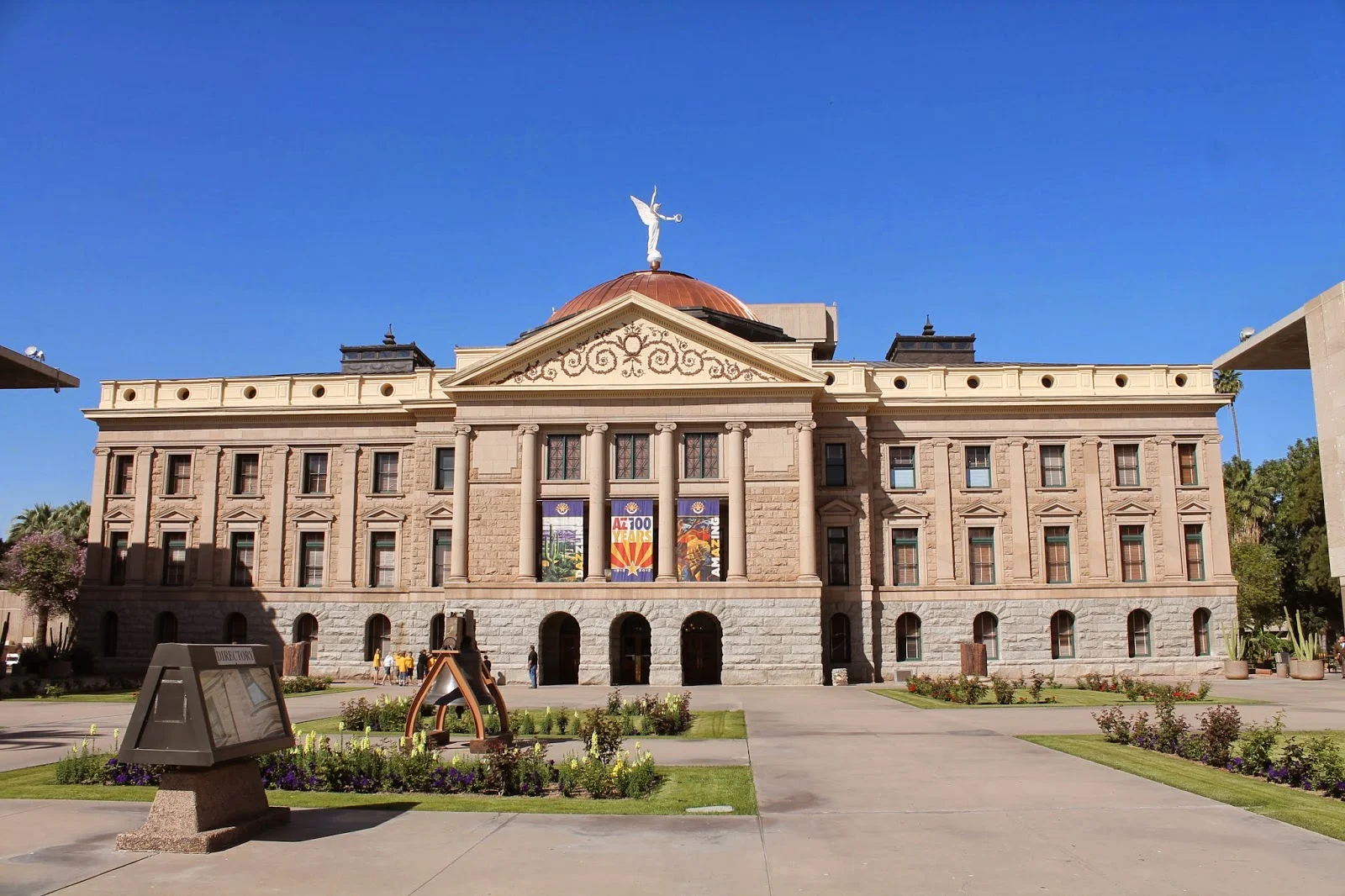
Key Highlights
- SB1042 permits investment of up to 10% of certain public funds in digital currencies including Bitcoin
- SB1649 establishes a Digital Assets Strategic Reserve Fund utilizing confiscated crypto assets
- Both measures passed House Rules Committee review on March 31, 2026
- The reserve fund could hold Bitcoin, XRP, DigiByte, and approved stablecoins
- Legislation advances to full House floor consideration before final approval process
The Grand Canyon State is positioning itself at the forefront of cryptocurrency adoption with legislative measures that could transform how public funds interact with digital assets. Two bills advancing through Arizona’s legislature would enable controlled Bitcoin investments and establish a state-operated crypto reserve. Following committee approval, these proposals face a full House vote that could solidify Arizona’s role as a pioneer in government-level digital currency integration.
Committee Approval Marks Significant Milestone
The Arizona legislature has propelled two cryptocurrency-focused bills through a critical checkpoint following a pivotal committee decision. On March 31, 2026, both SB1042 and SB1649 successfully passed through the House Rules Committee. These measures now advance to the complete House chamber for deliberation.
The first bill, SB1042, would authorize designated public funds to allocate as much as 10% of their portfolios into virtual currencies. This encompasses Bitcoin alongside other sanctioned digital assets. The legislation establishes clear boundaries to manage risk while permitting state participation in cryptocurrency markets. The companion bill, SB1649, establishes the framework for a Digital Assets Strategic Reserve Fund. State authorities would oversee this fund, capitalizing on digital assets confiscated through law enforcement activities.
🇺🇸 ARIZONA LEADS U.S. CRYPTO CHARGE WITH BOLD BILLS
Arizona is making a bold move with SB1042 and SB1649 passing the House Rules Committee on March 31, 2026, now awaiting a full House vote.
SB1042 permits up to 10% of select public funds into assets like $BTC, while… https://t.co/DDOEtHH5kM pic.twitter.com/PbU7SP28vu
— CryptosRus (@CryptosR_Us) April 1, 2026
The legislation details protocols for asset storage and integration within governmental infrastructure. Additional approval stages remain before implementation. Following House floor deliberation, both measures must achieve bicameral consensus and secure the governor’s endorsement. These subsequent steps will ultimately decide whether the proposals transform into enforceable law.
Design and Parameters of Arizona’s Crypto Framework
These companion bills present a methodical blueprint for incorporating digital currencies into state financial operations. SB1042 addresses investment strategy by establishing boundaries and identifying qualified funds. The measure incorporates provisions for future modifications within established regulatory parameters.
SB1649 describes the establishment of a reserve dedicated to digital assets acquired through legal confiscation proceedings. The bill specifically identifies Bitcoin, XRP, DigiByte, and select stablecoins as permissible holdings. Provisions address custodial requirements and governance protocols. The reserve concept diverges from traditional investment approaches. Rather than dedicating new appropriations, it leverages assets already in state possession through enforcement actions.
This methodology minimizes direct fiscal exposure while simultaneously developing the state’s digital asset holdings. Legislative sponsors have characterized these bills as modernization initiatives for governmental finance. The measures reflect emerging patterns where public entities investigate blockchain-based assets. Nevertheless, the legislation incorporates restrictions and specified oversight mechanisms.
Regional Innovation and National Context
Arizona’s legislative movement occurs alongside similar explorations by multiple state governments nationwide. Various jurisdictions have proposed comparable frameworks, though relatively few have achieved equivalent legislative momentum. Arizona’s advancement positions the state among pioneering adopters in this emerging policy domain.
On the federal level, comprehensive digital asset regulation continues to evolve. State initiatives frequently progress more rapidly, benefiting from more focused jurisdictional scope. This dynamic enables regional governments to pilot innovative approaches ahead of comprehensive federal standards. Globally, numerous governments have evaluated cryptocurrency reserves and integration frameworks.
International approaches demonstrate considerable variation in magnitude and design. Arizona’s proposal emphasizes measured exposure and systematic asset oversight rather than extensive capital deployment. The forthcoming House vote will establish the trajectory for these initiatives. Upon approval, the bills would progress through remaining legislative requirements. The ultimate determination will define Arizona’s position within the expanding digital asset ecosystem.
